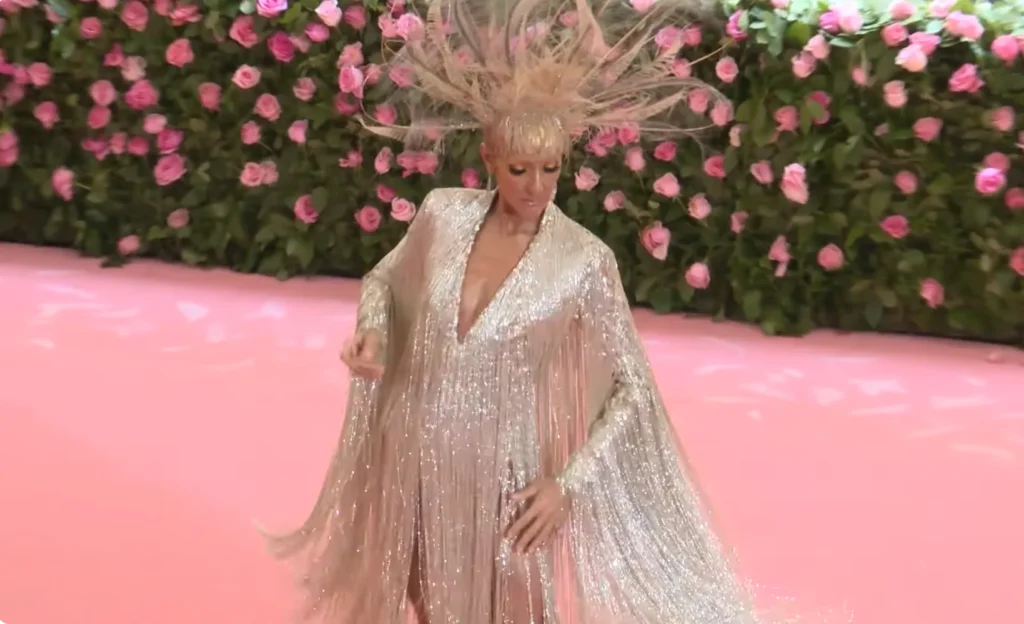


The blow up is the hairstyle of the moment. That generous volume, those waves that look natural but are carefully constructed, that feeling of “I just came out of the ocean” that actually requires 45 minutes of professional work. And the market has noticed the trend. Salon prices have skyrocketed, while technology tries to change the game with tools that promise to replicate the result without the damage.
The Blow Up As a State of Mind
The blow up is not just a hairstyle. It is a state of mind. It is that person who walks into a room and their hair gets noticed before they do. It is volume that breathes, waves that move, a type of hair that exists in three dimensions rather than flat against the head.
Five years ago this was a trend. Now it is standard. And it is ubiquitous among a very specific type of person: those who care about their image, those who work in creative industries, those who understand that hair is architecture.
The problem is that the blow up requires maintenance. It is not something you do once. It is a state you need to preserve constantly. Every time you wash your hair it risks collapsing into more subtle waves. Every night of sleep flattens it a bit more. To maintain it, you need:
A proper haircut (professional cut to create the right layers). Tools (powerful dryer, round brush, possibly a curling iron). Technique (which is harder than it looks). Products (mousse, hairspray, possibly extensions if you want more volume).
Or you simply pay someone to do it for you once, twice, three times a week.
The Price Increase: The Economic Reality
This is where the story becomes interesting. Three years ago, a blow up at a mid-range salon in Madrid cost between 35 and 50 euros. Now, that same service costs between 70 and 120. At premium salons, we are talking about 150 euros or more.
What triggered this? Simple demand. The blow up is practically the mandatory hairstyle in certain circles. Not having it reads as carelessness. And because demand is high and supply is limited (there are only so many stylists specialized in this), prices rise.
But there is more. Salons discovered that people would pay. Because the blow up became a business necessity for many professional women. It is not vanity. It is that you walk into an important meeting with flat hair and it looks like you do not care. You walk in with a blow up and there is a different confidence.
Salons know this. And the prices reflect it.
Dyson and the Technological Revolt
Then comes Dyson. The company that decided hair dryers should cost 400 euros. And with them, the AirWrap for 600, which is a revolutionary tool: it does not use direct heat but primarily air at different speeds and intelligent temperatures to create volume and waves.
What is revolutionary here is the paradigm shift. Traditional dryers damage hair. Most of the styling you see is the result of extreme heat that smooths the hair cuticle into a shape. It works, but the cost is cumulative damage. Your hair becomes fragile, dull, with split ends. You need repair treatments. More expense.
The Dyson system is different. It uses intelligent air. Infrared sensors measure hair temperature and adjust heat so it never reaches damaging temperatures. Volume comes primarily from air pressure and speed, not from extreme heat.
The result? They say your hair comes out healthier. And most importantly: the blow up lasts longer because the hair is not literally burned, just shaped by air.
The Price Paradox
Here is the delicious irony. Dyson costs 600 euros. A blow up at a salon costs 80. If you get one every three days, in a year you will have spent almost 10,000 euros at the salon. The Dyson investment pays for itself.
But there is a problem: it requires technique. The AirWrap is not intuitive. You need practice. Early attempts can be disastrous. So what do people do? They watch tutorials. They keep practicing. And eventually, some achieve salon-quality results.
But not everyone. And that is what is brilliant about Dyson’s design. It promises the democratization of professional blow ups. It sells the idea that you can do it at home. And it is true that you can, but it requires investment, time, and skill.
So now we have three markets:
Those who pay for salons (increasingly expensive). Those who invest in Dyson (expensive once, but requires skill). Those who use a regular dryer and hope the result is acceptable (mostly it is not).
Other Tools: The Competition
Dyson is not alone. Now there is an entire market of expensive tools designed to create the blow up at home. The Shark FlexStyle for 400 euros. The T3 Cura Luxe. Tools from lesser-known brands but with similar specifications.
All promise the same thing: the technology to replicate what a professional hairstylist does. All cost between 300 and 700 euros. And all, curiously, are gaining market share.
Why? Because at a certain point, paying 80 euros three times a week becomes psychologically unsustainable. So people invest in the tool thinking it will “pay for itself.” Sometimes it works. Sometimes the tool collects dust because the learning curve is steep.
The Blow Up As Status Symbol
What underlies all of this is something deeper. The blow up is the hairstyle of the professional worker. It is the hairstyle of someone who has money and cares. It is visible. It is not discrete. It says: “I have invested time and money in my appearance.”
In a world where the effortless aesthetic is the general trend, the blow up is an interesting exception. It does not pretend to be effortless. It boasts the effort. The exaggerated volume, the careful waves, the feeling of “I have been to the salon” is precisely the point.
It is the opposite of the flat, “natural” hairstyle that dominated a decade ago. It is decorative. It is architectural. It is luxury.
And that is why people pay for it.
Conclusion
The blow up is the hairstyle that represents our current economic era. It is expensive at the salon. It is expensive in at-home tools. It is almost designed to generate spending. It is not something you do once. It is a state you need to maintain constantly.
Salons know this, and prices reflect it. Dyson and other brands know it too, and offer an expensive alternative that promises autonomy.
What is certain is that the blow up is not going to disappear. It is too visible, too linked to professionalism and image consciousness. So as long as the trend continues, prices will keep rising, and people will keep choosing: pay the salon or invest in a tool that lets them do it themselves.
Either way, the blow up comes with a cost. And that cost is the point.