

Article
The Met Gala exists in a strange tension. It’s marketed as a celebrity event—a parade of famous faces and social media moments. Yet, the night’s true architects are invisible. They work in ateliers across Paris, Milan, London, and New York. They stitch, bead, embroider, and construct for months before the red carpet unfurls. Then they watch from behind screens as someone else wears their work for four hours.
This year’s dress code—”Fashion is Art,” tied to the Costume Institute’s spring exhibition “Costume Art”—demanded something beyond spectacle. It asked designers to engage with art history, with the relationship between clothing and the human body, with the philosophical question of whether fashion itself constitutes art.
Some answered with profundity. Others answered with spectacle. The most interesting answered with both.
Here are the designers who defined the 2026 Met Gala—not the celebrities who wore them.
Olivier Rousteing: Heritage Made Visible
The night’s most discussed look was Beyoncé’s diamond-encrusted skeletal gown—a custom creation by Olivier Rousteing, the former creative director of Balmain. The dress, which mapped a crystalline skeleton across a sheer bodysuit, was simultaneously anatomical and ornamental, treating the human body as both subject and canvas.
But the deeper story is in the references. Rousteing, who is of Ethiopian and Somali descent and was raised in France, designed the look in collaboration with Beyoncé’s longtime stylist Ty Hunter. The inspiration drew from Creole artist Caroline Durieux, connecting Beyoncé’s Louisiana Creole heritage to a visual language of mortality and beauty that runs through both African diaspora art and European memento mori traditions.
The skeleton motif—thousands of individual crystals placed to trace the human skeletal system—required extraordinary precision. Each crystal was positioned to correspond anatomically, creating an effect that was both decorative and educational. The dress simultaneously celebrated the body’s structure and adorned it with light.
Rousteing’s relationship with Beyoncé stretches back decades—he was initially hired by Tina Knowles to work with Destiny’s Child during their Survivor era. This continuity matters. The Met Gala’s strongest looks emerge from long-standing designer-client relationships where mutual understanding eliminates guesswork.
What Rousteing achieved was rare: a look that functioned as celebrity spectacle, cultural commentary, and technical mastery simultaneously. The skeleton gown will be remembered. The craft behind it deserves equal attention.
Chanel: 761 Hours for Four Hours of Wear
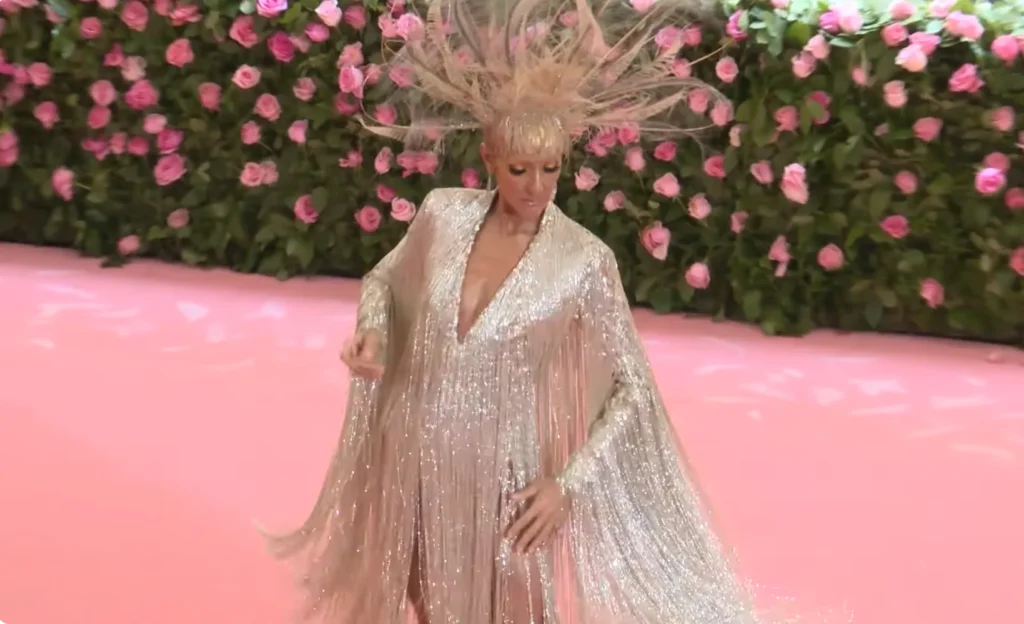
Margot Robbie’s golden lamé gown appeared deceptively simple—a strapless column of gold that channeled classical statuary. But Chanel revealed that the dress required 761 hours of construction. That number is worth contemplating.
Seven hundred and sixty-one hours. Approximately 19 weeks of full-time labor for a single person. In practice, multiple artisans worked simultaneously, but the cumulative investment remains staggering. The golden lamé fabric—woven with real metallic thread—required hand-finishing techniques that prevented the material from tearing or losing its drape. Every seam was hand-constructed to maintain structural integrity while allowing movement.
This is the paradox of haute couture at the Met Gala. The dress appeared effortless—minimal decoration, clean lines, no embellishment beyond the fabric itself. Yet that apparent simplicity required nearly a year of craft. The absence of visible complexity was itself the achievement.
Robbie, working with stylist Andrew Mukamal, chose Chanel deliberately. Her previous press tours demonstrated a systematic approach to fashion storytelling—the Barbie promotional wardrobe drew from Mattel’s archives, while the Wuthering Heights campaign channeled Victorian gothic through Schiaparelli. The Met Gala gold gown continued this pattern: fashion as narrative device, not mere decoration.
What Chanel demonstrated with Robbie’s dress is a principle that deserves broader recognition: simplicity is the most expensive aesthetic. When you remove embellishment, every flaw in construction becomes visible. Excellence becomes the only option.
Schiaparelli: The House That Understood the Assignment
If one house consistently engaged with “Fashion is Art” as philosophical proposition rather than costume prompt, it was Schiaparelli.
Kylie Jenner’s illusion dress featured 10,000 individual pearls and required an astonishing 11,000 hours of embroidery. That figure—11,000 hours—represents approximately five and a half years of full-time work by a single person. In reality, teams of embroiderers worked in parallel, but the scale of human labor invested in a single garment is breathtaking.
The dress created an optical illusion: pearls were placed to suggest translucency, making solid fabric appear sheer. The technique drew directly from Surrealist principles that founder Elsa Schiaparelli pioneered in the 1930s—fashion as trompe l’oeil, clothing that deceives the eye and questions the boundary between dressed and undressed, between art and artifice.
Lauren Sánchez Bezos, an honorary co-chair, wore Schiaparelli in a navy look referencing John Singer Sargent’s famous “Madame X” portrait. The connection was direct and literate: Sargent’s painting of Virginie Amélie Avegno Gautreau was itself scandalous when exhibited in 1884, the subject’s revealing dress and confident pose challenging Victorian propriety. The choice positioned Sánchez Bezos within a specific art historical lineage—women who use fashion to claim space and provoke.
What distinguishes Schiaparelli’s approach is intellectual rigor. The house doesn’t simply reference art—it engages with art’s conceptual framework. The pearl illusion dress isn’t decorated with art motifs; it employs artistic technique (trompe l’oeil) as its structural principle. The Madame X reference isn’t costume; it’s commentary on the politics of the female body in public space.
This is what “Fashion is Art” means when taken seriously.
Robert Wun: The Indie Designer Who Commanded the Stairs
One of the evening’s most significant narratives was the prominence of independent designers on the Met Gala steps—a space traditionally dominated by major fashion houses.
Robert Wun, the Hong Kong-born, London-based designer, delivered two of the night’s most architecturally ambitious looks. Lisa of Blackpink wore Wun’s white veiled gown that framed her face with additional sculptural arms—a piece that treated the human body as an armature for architectural extension. Theater producer Jordan Roth wore another Wun creation, and artist Audrey Nuna appeared in a paint-splattered Wun design.
Wun’s achievement is particularly notable because his house operates without the institutional support of LVMH, Kering, or Richemont. His atelier is small. His production is limited. Yet his technical ambition rivals houses with hundred-fold his resources.
The multiple-arm construction on Lisa’s gown required engineering as much as tailoring. The sculptural extensions needed to maintain position throughout the evening—through walking, sitting, climbing the Met’s famous stairs—without mechanical support visible to cameras. This is structural design married to aesthetic vision.
Wun represents a broader shift visible at this year’s Gala. Brandon Blackwood dressed Russell Wilson in a cream custom suit with gold wing detailing. Manish Malhotra created a cape for himself featuring sculptural white figures, requiring over 960 hours of construction—a tribute to the artisans and tailors he works with. Palomo Spain designed Luke Evans’s leather-studded suit channeling Finnish artist Tom of Finland.
These independent designers are claiming space previously reserved for heritage houses. Their presence signals a structural change in fashion’s power dynamics: the Met Gala is no longer exclusively a showcase for established luxury brands. It’s becoming a platform where creative ambition matters more than corporate backing.
Saint Laurent: The House of Quiet Authority
While other houses pursued spectacle, Saint Laurent’s creative director Anthony Vaccarello—who co-chaired the Gala Host Committee alongside Zoë Kravitz—deployed a strategy of elegant restraint.
Madonna wore one of Vaccarello’s designs, accessorized with a pirate-ship hat and a brass circular trumpet, accompanied by women with sheer blindfolds displaying her outfit. Kate Moss appeared in a characteristically sultry, see-through Saint Laurent look. Rosé of Blackpink arrived in the brand. Hailey Bieber chose a sculptural Saint Laurent gown. Doja Cat, known for maximalist red carpet choices, took a notably simpler approach with a draped Saint Laurent gown, telling Vogue she wanted her hair, dress, and shoes to match her skin tone. Charlie XCX wore Saint Laurent with a single floral stem motif.
Vaccarello’s approach was strategic: rather than creating one headline-dominating look, he dressed a diverse portfolio of attendees in variations on Saint Laurent’s core aesthetic. This distributed approach meant the house was visible throughout the evening rather than concentrated in a single moment.
The Vaccarello strategy reflects a sophisticated understanding of the Met Gala’s media ecosystem. In an evening where one Beyoncé skeleton dress generates millions of social impressions, a house that dresses six attendees creates sustained visibility across different audience segments. Madonna’s audience isn’t Charlie XCX’s audience. Kate Moss’s followers aren’t Doja Cat’s. By diversifying his carpet presence, Vaccarello ensured Saint Laurent reached every demographic that matters to luxury fashion.
Thom Browne: When Craft Becomes Performance
Chase Infiniti’s sequin-encrusted gown from Thom Browne was among the evening’s most technically demanding creations. The custom piece comprised over 1.5 million individual sequins, each placed to create a multi-colored representation of the female form. The garment was effectively a wearable mosaic—a pointillist painting executed in reflective material.
The construction scale is difficult to comprehend. 1.5 million sequins, each requiring individual placement and securing. Even at a rate of one sequin per second—an impossibly fast pace for precision work—the sequin placement alone would require over 400 hours. In reality, the timeline was substantially longer, as each sequin’s position, angle, and color were determined by the overall design pattern.
Browne’s approach to the “Fashion is Art” theme was the most literal: he created art through fashion’s own medium. Rather than referencing a specific painting or sculptor, he employed a painterly technique—pointillism—using fashion materials. The dress didn’t depict art; it was art, constructed through the grammar of clothing.
The Mugler Moment: Emma Chamberlain’s Personal Narrative
Emma Chamberlain’s hand-painted custom Mugler gown, designed by the house’s creative director Miguel Castro Freitas, introduced a personal dimension that most Met Gala looks avoid. Chamberlain’s father is a painter, and the gown’s hand-painted technique was a direct tribute to his artistic practice.
This personal connection elevated the dress from costume to autobiography. The painted surface wasn’t a print or digital reproduction—it was literally hand-applied paint on fabric, carrying the imperfections and intentionality of human touch. In an evening dominated by machine-precision embroidery and crystalline exactitude, Chamberlain’s gown offered something warmer: the evidence of a human hand.
Mugler under Freitas has consistently pushed the boundary between fashion and sculpture. The hand-painting added another dimension: fashion as canvas, clothing as the intersection between visual art and wearable design.
The Craft Economy: What the Numbers Reveal
Aggregating the reported construction data from this year’s Met Gala reveals the scale of human labor invested in a single evening:
Kylie Jenner’s Schiaparelli dress: 11,000 hours of embroidery. Margot Robbie’s Chanel gown: 761 hours of construction. Manish Malhotra’s cape: 960 hours. Chase Infiniti’s Thom Browne gown: estimated 400+ hours of sequin placement alone. Robert Wun’s multiple creations: undisclosed but substantial given the structural engineering involved.
Conservative estimate for the top 20 looks at the 2026 Met Gala: 15,000-20,000 combined hours of artisan labor. That represents roughly 8-10 years of full-time work by a single person, compressed into a few months and distributed across dozens of specialists in ateliers around the world.
Each hour represents a person—a seamstress, an embroiderer, a pattern maker, a beader—sitting at a workstation, performing precision handwork that cannot be automated. The Met Gala, for all its celebrity spectacle, is fundamentally an exhibition of human skill.
This year’s “Fashion is Art” theme made this reality unusually visible. When a house reports that a dress took 11,000 hours, the implicit message is: this garment represents human mastery at a scale that justifies the word “art.”
What the Theme Revealed: Fashion’s Identity Crisis
“Fashion is Art” seems like a statement. In practice, it’s a question—one the industry has debated for decades without resolution.
The 2026 Met Gala offered competing answers:
The literalists (Lena Dunham referencing Artemisia Gentileschi’s “Judith Beheading Holofernes” through Valentino, Kendall Jenner channeling the Winged Victory of Samothrace through Zac Posen for Gap, Camila Mendes in Manish Malhotra referencing painter Amrita Sher-Gil) treated fashion as a medium for art historical citation. Their gowns were essays—garments that required knowledge to read.
The conceptualists (Schiaparelli’s trompe l’oeil, Beyoncé’s anatomical skeleton, Lisa’s architectural body extension) treated fashion as an art practice—using artistic techniques and conceptual frameworks rather than referencing specific artworks.
The craftsmen (Chanel’s 761 hours, Thom Browne’s 1.5 million sequins, Schiaparelli’s 11,000 hours) let the labor speak. Their implicit argument: fashion is art because it requires the same investment of human skill, vision, and technical mastery.
The performers (Bad Bunny aging himself decades with prosthetics by Mike Marino, Heidi Klum transforming into a living statue, Madonna’s theatrical entourage) treated the red carpet itself as performance art—the body as medium, the staircase as stage.
Each answer was valid. None was definitive. And that ambiguity is itself the point: fashion’s relationship to art is productive precisely because it remains unresolved. The tension between commerce and creativity, between wearability and conceptual ambition, between celebrity spectacle and atelier mastery—this tension is what makes fashion culturally interesting.
The Invisible Hands
At approximately 11:30 PM on Monday, May 4th, the last celebrity departed the Metropolitan Museum of Art. The dresses were removed, carefully hung, and prepared for return to their respective houses. Some will enter archives. Others will be disassembled, their components repurposed. A few will be exhibited.
In ateliers across the world, seamstresses who spent months constructing these garments watched coverage on their phones. They saw their work photographed, discussed, praised, and criticized. They saw celebrities receive credit for “wearing” what they had built.
This is the Met Gala’s fundamental asymmetry. The people who create the work are invisible. The people who wear it are celebrated.
Yet, the 2026 Gala—through the “Fashion is Art” theme—briefly made this invisible labor visible. When Chanel reports 761 hours, when Schiaparelli reports 11,000, when the industry speaks in units of human time rather than celebrity wattage, the narrative shifts. The artisan enters the frame.
These numbers aren’t marketing. They’re testimony. They’re evidence that fashion, at its highest level, requires the same investment of human skill, dedication, and mastery that defines any art form.
The designers who defined the 2026 Met Gala red carpet weren’t simply dressing celebrities. They were making an argument—stitch by stitch, bead by bead, crystal by crystal—that fashion is, genuinely, art.
The 15,000 hours of collective labor that walked up those stairs on Monday night is the strongest evidence yet.