

Fashion · DUSK Gazette
Twenty years after the original, The Devil Wears Prada 2 has just landed in cinemas — and the world is watching. Miranda Priestly is back, this time fighting for survival in a media landscape drowning in influencers, digital chaos and the slow death of print. The first trailer pulled 185 million views in 24 hours. Runway is trending again.
And while everyone fixates on the drama — the power plays, the looks, the spectacle — the real question is the same one nobody asked in 2006.
What was Miranda actually wearing?
A white suit. Perfectly cut. Nothing else.
The Noise, and Those Who Don’t Need It
Miranda Priestly never dressed to impress. She dressed to be undeniable. No logos, no excess, no seasonal declarations of allegiance to whatever trend had just filtered down from the runway to the high street. Her power lived in the precision — in the cut, the fabric, the absolute absence of anything unnecessary.
That’s the paradox at the heart of the new film: Miranda, the woman who built an empire on the culture of more, has always expressed her own authority through less. The chaos of Runway swirled around her. She was the still point at its centre.
In a sequel set against the noise of the attention economy — endless content, viral moments, influencers as the new arbiters of taste — that stillness reads differently now. It reads like resistance.
Carolyn Bessette Already Knew
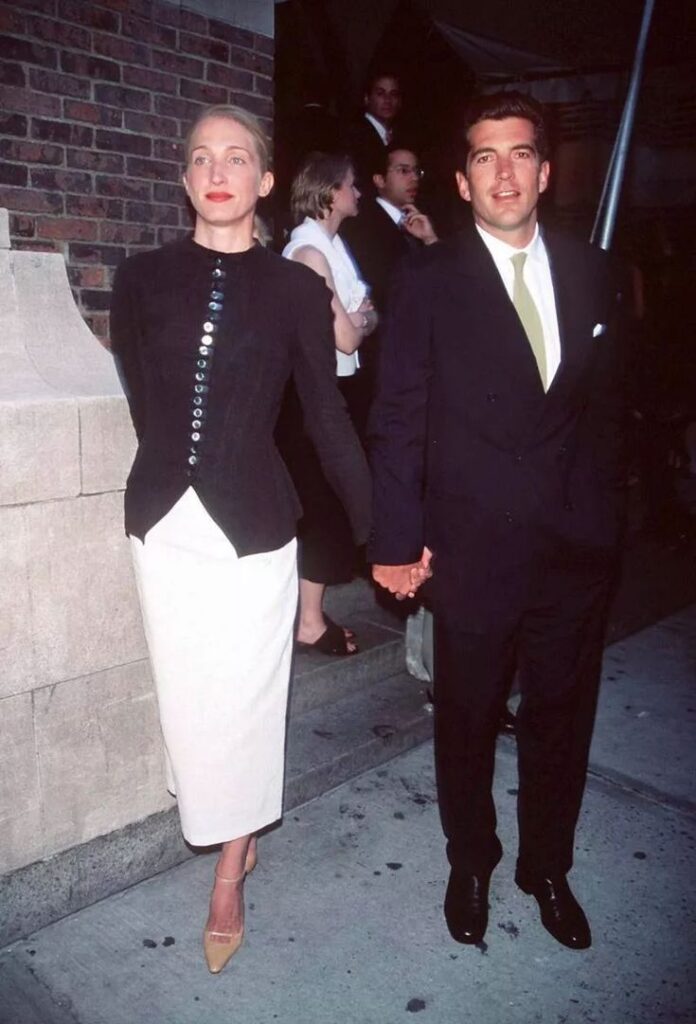
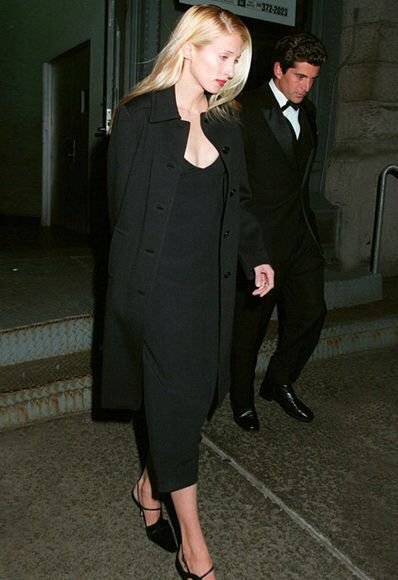
New York, 1996. A woman with sharp cheekbones and ash-blonde hair crosses a pavement in a white cashmere coat and perfectly cut trousers. She carries nothing extra. She needs nothing extra.
Her name is Carolyn Bessette. She spent years working behind the scenes at Calvin Klein — understanding fabric, understanding construction, understanding the difference between a clean seam and a careless one — and learned everything about clothes in order to wear them as if she’d never thought about them at all. Which is, of course, the only way true elegance works.
Three decades later, her image circulates on the mood boards of creative directors and the Pinterest boards of women who weren’t born when she died. That’s not nostalgia. That’s recognition. When the world gets loud enough, clarity becomes the most powerful thing in the room.
Her formula was never a formula. It was a conviction: that what you wear should serve you, not announce you. That quality speaks slowly and doesn’t need to repeat itself. That a white coat worn with absolute certainty is more arresting than anything fighting for attention.
She was right then. She’s still right now.
The Wardrobe That Doesn’t Date
The capsule wardrobe has been threatening to become a trend for decades — and keeps failing at it, because the moment something becomes a trend it stops being a capsule wardrobe and starts being its costume.
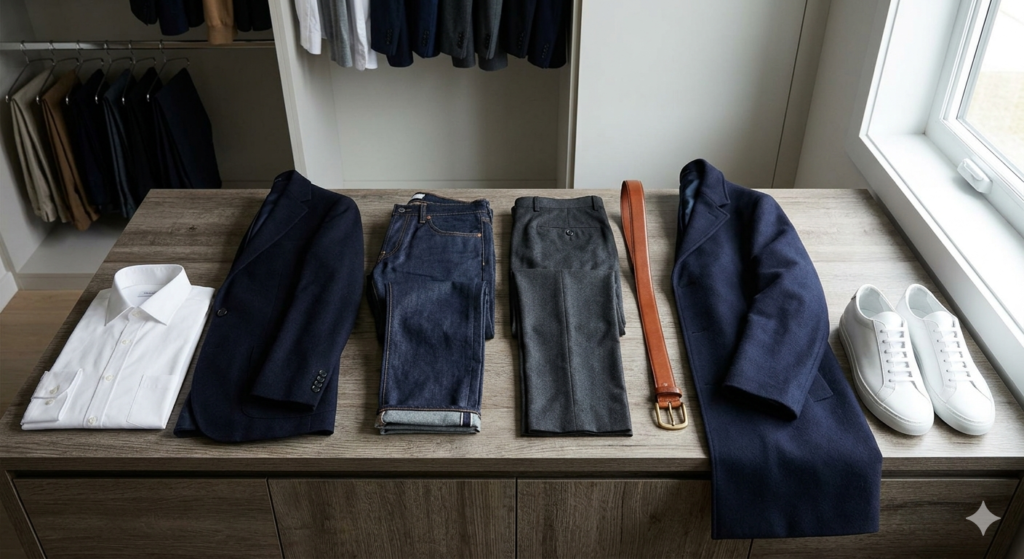
The idea is simpler and more demanding than it sounds: a small number of high-quality pieces, neutral in palette, solid in construction, capable of combining with each other with mathematical consistency. No bad season for camel. No wrong occasion for cashmere. No year in which a well-cut coat becomes outdated.
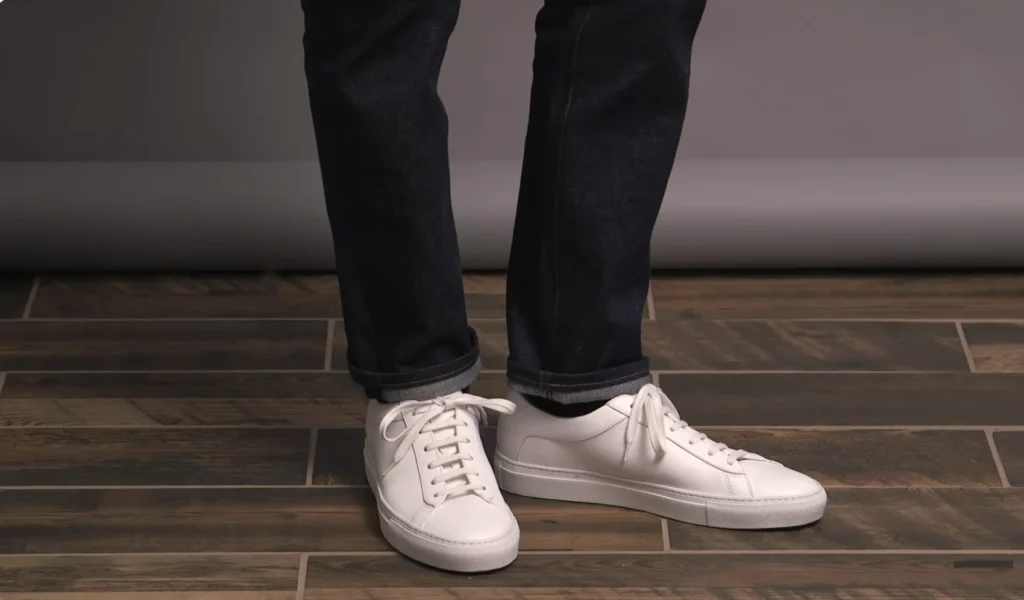
The building blocks are always the same, though every body and every life adjusts them slightly. A well-cut blazer — navy, charcoal or camel — that works with jeans and with tailored trousers. Two or three heavy-knit T-shirts in white, black and off-white. Straight-cut trousers in gabardine or cool wool. A long coat where the quality of the cloth is everything. A structured leather bag with clean lines. Shoes in two or three earth tones that speak the same language as everything else.
None of this is boring. What’s boring is owning eighty pieces and having nothing to wear.
The real investment logic is straightforward: a £120 white T-shirt from Sunspel that holds its shape for five years costs less per wear than a £12 one that distorts after the third wash. This isn’t a luxury argument. It’s arithmetic.
The Chic That Doesn’t Try
The new Devil Wears Prada arrives at a moment when the fashion industry is more saturated, more frantic and more disposable than ever. Every week brings a new micro-trend, a new must-have, a new aesthetic category invented to give people something to chase. The machine requires constant motion.
Real style has always been the opposite of that. It’s the person who stops the room not because of what they’re wearing, but because of how completely they inhabit it. Carolyn Bessette stopped rooms. Miranda Priestly — beneath the fiction — stops rooms. Anna Wintour, who reportedly attended the 2006 premiere dressed in Prada without knowing what the film was about, still stops rooms.
What they share isn’t a brand. It’s the certainty of someone who has already decided, and doesn’t need to be convinced by this season.
Less, But Yours
True chic isn’t an aesthetic. It’s an honest relationship between a person and what they’re wearing — one that doesn’t disguise, doesn’t perform, doesn’t explain itself. Carolyn Bessette didn’t dress for the magazines. She dressed for herself, and the magazines had no choice but to look.
Miranda Priestly, for all her tyranny, understood the same thing. She didn’t need to impress anyone with what she wore. And in a story about a world addicted to excess, that was always the most intimidating thing about her.
In a culture that never stops adding, choosing to keep only what matters — fewer pieces, better made, entirely your own — is perhaps the most radical act of all.
And the most luxurious.
DUSK Gazette — Style & Culture